 Fargo Kitchen Exhaust Cleaning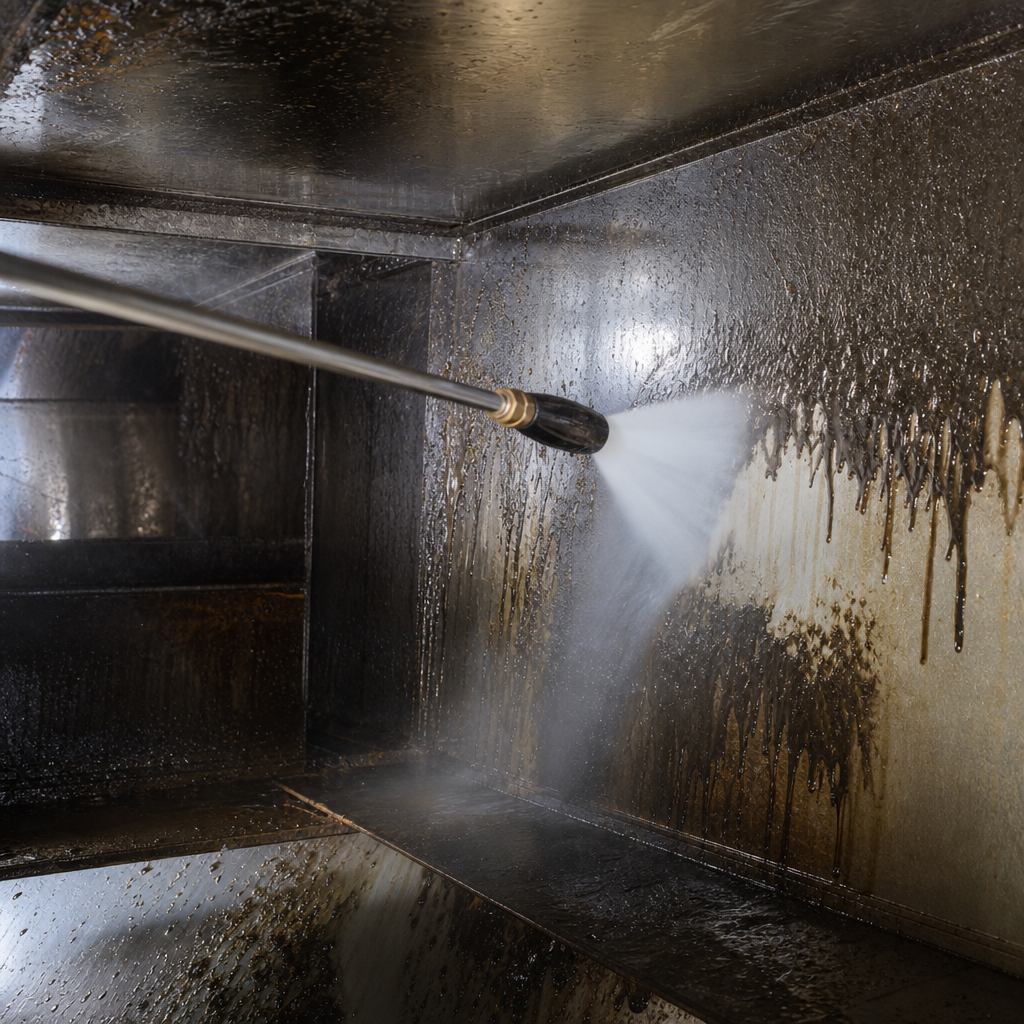
Fargo Kitchen Exhaust Cleaning connects restaurants and commercial kitchens across the Fargo–Moorhead metro with certified, insured local companies for NFPA 96 kitchen exhaust cleaning: hood, filters, plenum, ductwork, and rooftop fan, cleaned to bare metal and photo-documented. A typical single-hood cleaning runs $300–$700 per service, work happens overnight after your kitchen closes, and every visit ends with the dated sticker and service report your fire inspector asks for.
Whether you call it hood cleaning or kitchen exhaust cleaning, it’s the same job: removing the flammable grease your cooking line pushes into the exhaust system every service, before it becomes fuel over an open flame. If you run a kitchen in Fargo, West Fargo, or anywhere in the metro, this page covers what the standard actually requires, what it costs, and how the scheduling works.
What a full kitchen exhaust cleaning covers
A real cleaning treats the exhaust system as one grease path, because that’s what it is. Heat and vapor leave your appliances, pass through the baffle filters, collect in the plenum behind them, travel the ductwork, sometimes several stories of it, and exit through the rooftop fan. Grease condenses on every one of those surfaces.
A proper service covers all of them:
- Hood canopy and interior: scraped and pressure-washed, inside and out.
- Baffle filters: degreased, or swapped through a filter exchange route if yours are bent or burned through.
- Plenum: the chamber behind the filters where the heaviest buildup hides.
- Ductwork: the full run, vertical and horizontal, to the fan.
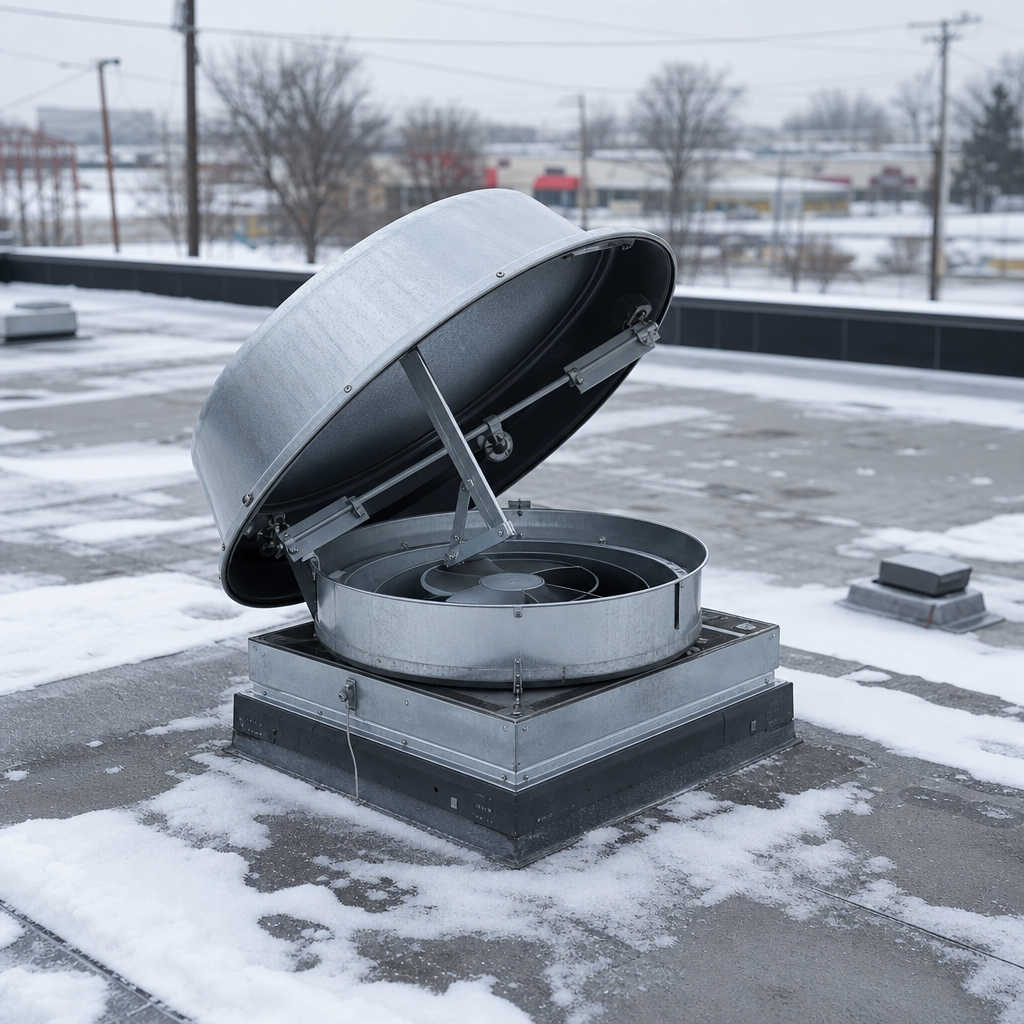
- Rooftop fan: housing, blades, and the grease around the curb. Fan work is its own discipline; see exhaust fan cleaning and repair.
The endpoint is the “bare metal” standard: no more than 0.002 inches (50 microns) of residual combustible contaminant on the cleaned surfaces. The cleaning method standard the fire code cites is ANSI/IKECA C10. A crew that wipes the canopy shiny and skips the duct hasn’t cleaned your system. It has polished the part your staff can see and left the fuel where the fire actually travels. The full process is on the restaurant hood and duct cleaning page.
How often: the inspect-then-clean rule
The frequency question has a precise answer, and most vendors get it slightly wrong. NFPA 96 (2024 edition) sets inspection frequencies in Table 12.4, keyed to how hard your line cooks:
| Cooking operation | Inspection frequency |
|---|---|
| Solid-fuel cooking (wood, charcoal) | Monthly |
| High-volume (24-hour, charbroiling, wok) | Quarterly |
| Moderate-volume | Semiannually |
| Low-volume (churches, seasonal, day camps, senior centers) | Annually |
Those intervals govern the inspection. Cleaning is triggered by what the inspection finds: under §12.6.1, grease is measured with a depth-gauge comb, and the system needs cleaning when buildup hits 0.078 inches (2000 microns) on surfaces, or 0.125 inches in fan housings. A charbroiler-heavy line usually hits the trigger by the quarterly inspection, which is why “quarterly hood cleaning” became the industry shorthand. The shorthand is close enough for scheduling; the mechanics matter when an inspector asks why your cadence is what it is. The NFPA 96 compliance page walks through how to place your kitchen in that table honestly.
The fire code side in Fargo
NFPA 96 doesn’t enforce itself, the local fire code pulls it into force. In Fargo, that’s the fire code enforced by the Fargo Fire Department, currently the 2024 International Fire Code per the department’s published code list. Practically, here’s what that means for a GM:
- The exhaust system has to be inspected and cleaned by qualified people on the NFPA 96 schedule for your cooking volume.
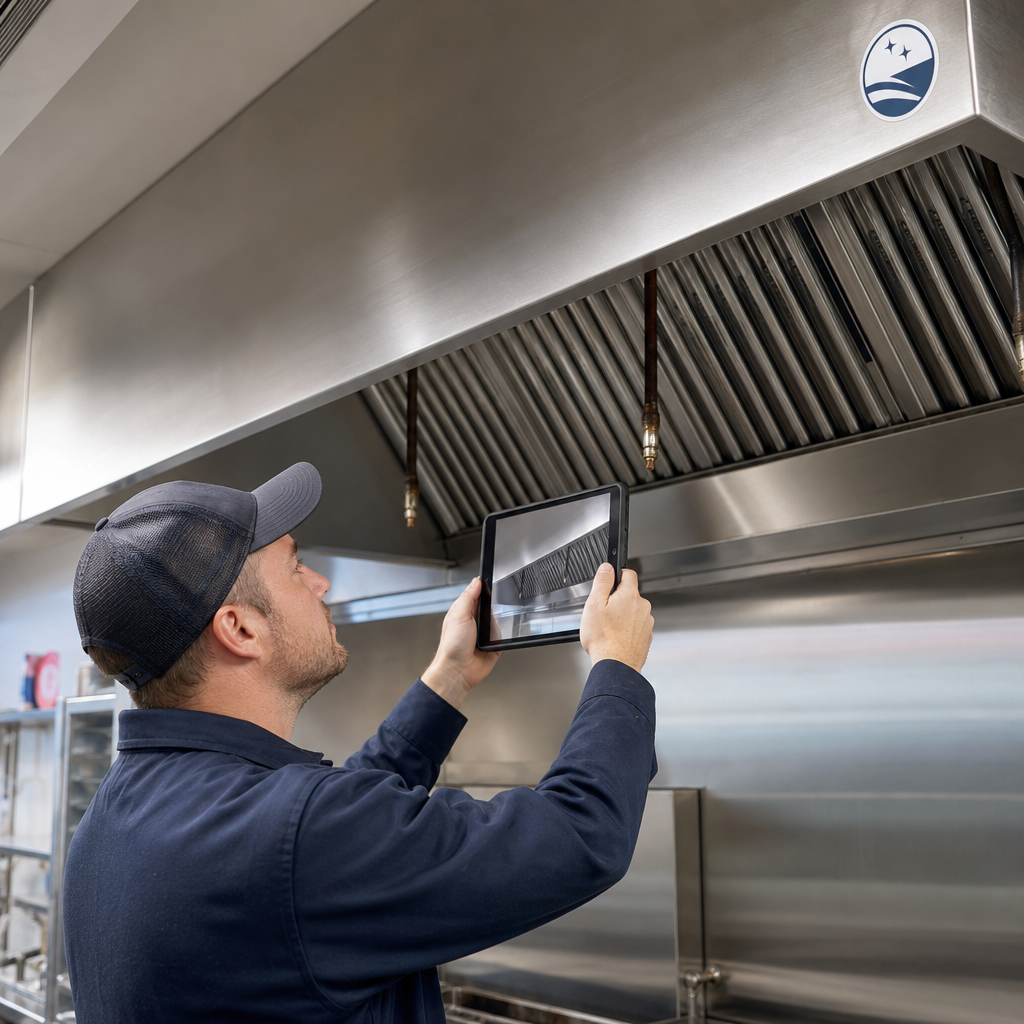
- After service, the crew leaves a dated certification sticker on the hood and a service report with before-and-after photos. That paperwork is what fire inspectors (and, after any incident, insurance carriers and adjusters) ask for.
- North Dakota has no state license for hood cleaners, so the qualification bar is the NFPA 96 one: properly trained, qualified, and certified persons acceptable to the authority having jurisdiction. IKECA’s CECS, CECT, and CESI are the credentials that clear that bar in practice.
We’ll say plainly what we never say: nobody can guarantee your inspection outcome, and anyone who promises a pass is selling something. What a documented bare-metal cleaning does is make the inspection a non-event.
Downtown Fargo and the Broadway corridor
The densest concentration of kitchens in North Dakota sits in a few walkable blocks of downtown Fargo: the Broadway corridor and the streets off it, where restaurants, bars, and coffee roasters occupy brick buildings that have been standing for a century. Downtown kitchens are their own animal for exhaust work:
- Long, old duct runs. Multi-story buildings mean vertical duct that nobody has looked inside for years. That run is exactly where a flash fire travels.
- Shared walls and shared roofs. A grease fire in one Broadway building is never just one tenant’s problem, and roof access often runs through a neighbor’s hatch or an alley ladder.
- Tight overnight windows. Downtown bars close late. Crews that work this corridor schedule around 2 a.m. closes and morning bakery preps, and they stage equipment from the alley, not the sidewalk.
If your kitchen is downtown, say so when you request a quote: duct run length and roof access are two of the biggest price drivers, and the walkthrough gets measured against your actual building, not a suburban template.
The grease trap side of compliance
Fire code covers the grease going up; the sewer rules cover the grease going down. Fargo runs an actual FOG (fats, oils, and grease) Program, administered through Water Reclamation’s Industrial Pretreatment Program together with Fargo Cass Public Health, that promotes best management practices and grease trap installation, with discharge limits set in Fargo Municipal Code 17-0203. The city doesn’t codify a pumping calendar; the industry-standard practice is the 25% rule, pump when FOG and solids reach a quarter of the trap’s capacity.
We handle that side too: grease trap pumping for indoor and under-sink traps ($150–$450 per visit, typically), and in-ground interceptor service for larger systems, with disposal manifests, and hauled waste going to city-approved discharge points as Fargo requires.
Pricing, published
Most hood cleaning outfits make you call to hear a number. Here are the typical ranges for this market:
| Service | Typical price |
|---|---|
| Single-hood system cleaning | $300–$700 per service |
| Multi-hood system (2–4 hoods) | $800–$1,500 per service |
| Indoor grease trap pump-out | $150–$450 per visit |
| In-ground interceptor (to ~1,000 gal) | $325–$950 per visit |
| Rooftop fan hinge kit install | $150–$300 |
Price depends on hood count, duct run length, roof access, grease load, and trap size. A free walkthrough gets you a firm quote. The full breakdown, including rush and pre-inspection service, is on the pricing page.
Who actually does the work
Honesty up front: Fargo Kitchen Exhaust Cleaning is an independently operated local service. We don’t hold IKECA certification ourselves and we don’t issue certificates: we connect your kitchen with certified, insured local companies that do this work every night, and we make sure the job that gets done is the full NFPA 96 job: whole system, bare metal, photos, report, sticker. One point of contact, one schedule, no chasing three vendors for hood, fan, and trap.
Where we work
Fargo and the metro core, plus West Fargo and its Sheyenne Street restaurant corridor, Horace to the south, Casselton out I-94 west, and scheduled route service to Grand Forks. Its own metro, 75 minutes north, with its own restaurant base around UND.
If you’re a GM or kitchen manager staring at a hood sticker that expired last quarter, the fix is one phone call: (701) 765-5584, or send the form for a free walkthrough quote. Overnight service, bare-metal results, and the paperwork that makes your next fire inspection boring.