 Fargo Kitchen Exhaust Cleaning
 Hood Filter Exchange & Service in Fargo
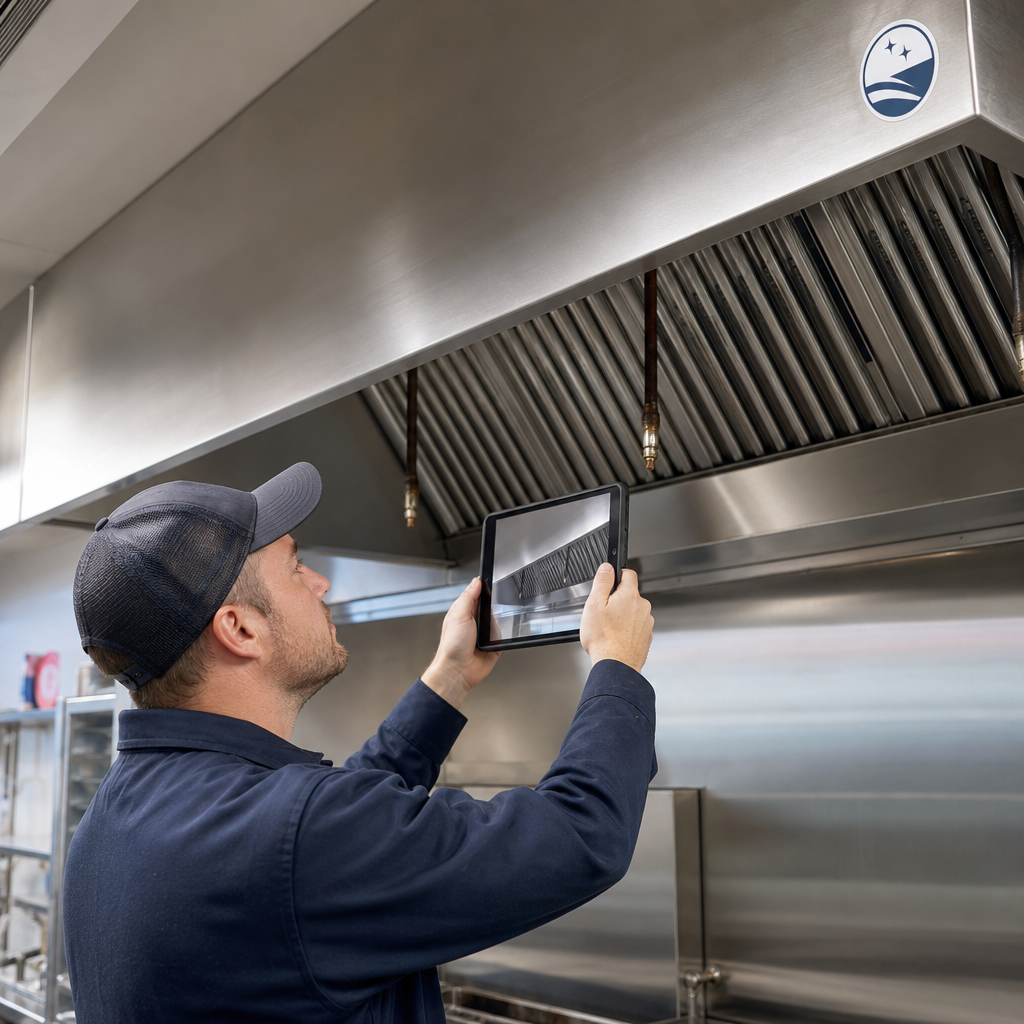
A hood filter exchange puts clean, undamaged baffle filters in your hood on a standing route: a crew arrives on schedule, swaps your greasy set for a freshly degreased one, hauls the dirty filters away, and replaces any that are bent or burned through. Your dish crew gets out of the filter-scrubbing business, your hood always has working baffles in it, and the most-handled part of your exhaust system stops being the most-neglected.
It’s the smallest service on this site and the one that most changes daily kitchen life.
Why filters matter more than they look
Baffle filters are the exhaust system’s first catch point. Grease-laden vapor comes off the line, hits the baffles, and changes direction hard. The sharp turns are what strip grease out of the airstream and drain it into the troughs, keeping the worst of the load out of the plenum and duct behind them.
That design only works when the filters do:
- Loaded filters stop stripping grease. Once saturated, they pass vapor straight through, and the buildup relocates to the plenum and ductwork, the expensive places, the ones that take an overnight full-system cleaning to reach bare metal.
- Loaded filters choke airflow. The hood captures less at the line, the kitchen hazes up during the rush, and the fan strains against clogged baffles, which shows up later as belt and bearing wear on the rooftop fan.
- Damaged filters are worse than dirty ones. A bent frame that doesn’t sit flush in the track leaves a gap, and vapor takes the gap every time. A burned-through baffle over a charbroiler is an open door to the duct.
- They’re what an inspector sees first. Pulling a filter to look behind it is the fastest check a fire inspector can make. Straight, clean baffles that seat properly say something about how the rest of the system is kept; mangled ones say something too.
Filters load far faster than the rest of the system, which is why they need attention weekly while the full system runs on its NFPA 96 Table 12.4 inspection cadence. The two schedules are complements, not substitutes.
In-house washing vs. exchange route: the honest comparison
Plenty of kitchens scrub their own filters, and it can work. Here’s the real trade:
In-house costs labor you’re already paying for, but it happens in the three-comp sink at the end of a long close, which in practice means it gets skipped on the bad nights, done halfway on the average ones, and it never fixes a bent frame. Aluminum and stainless baffles also come out of a caustic soak looking clean while the troughs and channels stay coated, because a sink soak isn’t a degreasing tank.
An exchange route costs money instead of labor, and buys three things: filters degreased properly in equipment built for it, a swap that takes minutes during a delivery window instead of an hour at close, and, the quietly valuable part, a trained set of eyes on your hood every week. Route techs notice the things that turn into problems: filters that no longer seat, grease tracking out of the plenum seams, a hood sticker heading toward expiration. Small catches on a route visit are how kitchens avoid rush-premium panic later.
For a low-volume operation (a church kitchen, a seasonal concession) in-house washing on a firm weekly habit is genuinely fine, and we’ll say so at the walkthrough. For a line that runs hard six or seven days, the route wins on math alone once you price the close-shift labor honestly.
How the route works
- Walkthrough. Filter count, sizes, and condition get recorded; your cooking volume sets the starting cadence, weekly for most full-service lines, biweekly or monthly for lighter operations.
- Swap visits. The crew arrives in a scheduled window, never mid-rush; a filter pull during the Friday push is a hard no, swaps the full set in minutes, and seats every filter in its track properly.
- Condition check. Bent, corroded, or burned-through filters get photographed and flagged for replacement rather than quietly reinstalled. You approve replacements before they’re billed.
- Cadence tuning. If filters come out saturated every visit, the interval tightens; if they’re light, it relaxes. The schedule follows the grease, not the contract.
Exchange routes are priced per visit based on filter count, size, and cadence, set at the walkthrough, flat thereafter. It’s the one service on this site without a published range, because a 4-filter sandwich-shop hood and a 20-filter hotel line aren’t the same route stop; the pricing page explains how we handle quotes for route work, and the walkthrough is free either way.
Where this fits in the compliance picture
Straight answer: a filter exchange keeps the front of your system healthy and your daily operation clean, but the fire code enforced by the Fargo Fire Department pulls in all of NFPA 96, inspection of the full system on the Table 12.4 frequency for your cooking volume, cleaning to bare metal when grease hits the measured trigger, and the sticker and service report to prove it. The NFPA 96 compliance page lays out the whole picture, and pairing a filter route with a standing full-system cadence is exactly how well-run kitchens make fire inspections uneventful.
The service runs anywhere our crews do: Fargo, West Fargo, Horace, Casselton, and stops on the Grand Forks route. If your closers are still scrubbing baffles at midnight, or your hood is running with a filter that’s been bent since last summer, call (701) 765-5584 or send the form and we’ll put your filters on a schedule that runs itself.
Frequently Asked Questions
What does a filter exchange service actually do?
On a set route schedule (weekly, biweekly, or monthly depending on your line) a crew swaps your baffle filters for a freshly degreased set and takes the dirty ones away for cleaning. Your staff stops scrubbing filters in the three-comp sink, the hood always has straight, clean baffles in it, and damaged filters get replaced instead of reinstalled.
How often should baffle filters be cleaned?
Far more often than the exhaust system itself, filters are the first catch point and load fastest. For most busy lines that means weekly, and for charbroiler-heavy or wok cooking even more frequently. The exchange cadence gets set at the walkthrough based on what you cook, then adjusted against what the filters actually look like at each swap.
When do filters need replacing instead of cleaning?
When they're bent, corroded, or burned through, or when handles and frames are damaged enough that they no longer sit flush in the track. A warped baffle filter lets grease-laden vapor bypass the baffles entirely and condense in the plenum and duct, so it's not doing its one job. Replacements get flagged with photos before they're billed.
Is a filter swap enough to keep me compliant?
No, and we won't pretend otherwise. Filters are one component of the system NFPA 96 covers: the hood, plenum, ductwork, and fan still need inspection on the Table 12.4 cadence for your cooking volume, with cleaning to bare metal when grease hits the trigger depth. The exchange service keeps the first line of defense healthy between those full cleanings.